- Drawn by
- Lex
- Date
- 2026-04
- Scale
- 1 : 1
- Sheet
- 05 OF 05
- A scene model for realtime interfaces, mixed media, and data visualization.
- Linux desktop and Android rendering targets.
- Asset handling and build tooling that connect an application project to a device.
- An automation protocol that observes the interface and acts through its input and command paths.

Scroll across the drawing to see the detail.
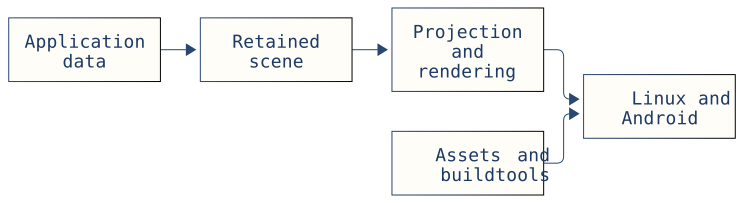
lurpicUI brings several layers of interface development into one framework: the application’s scene, the way it is rendered, the assets it needs, and the tools that build it for a device. The focus is realtime interfaces, mixed media, and data visualization on Linux and Android.
Describe a scene, then project it§
The framework keeps a structured description of the interface, called a retained scene. Its facet tree holds the parts of that scene. A projection step turns application data into the form the renderer needs.
The runtime thread owns mutable engine state. Background work uses snapshots and submits results with version checks, so a result computed from an older state can be identified before it changes the current interface.
Connect the framework to the device§
The supporting work includes asset bundling and streaming, plus Android build tooling. A project configuration, Go entry point, and application assets are the starting pieces. A diagnostic command checks the Android SDK, NDK, and JDK: the platform’s development tools, native-code tools, and Java toolchain.
Automation through the interface§
The Lurpic Drive Protocol, or LDP, exposes observations and actions through an authenticated local connection. Actions use the application’s input and command paths, with explicit permissions and priority for human input.
Together, these pieces show the work involved in building a framework that connects an application’s data model, rendering, automation, and delivery.